Mad women make for great horror films - as subjects or filmmakers, or preferably both.

Written by Jess Sweetman
As the joyless feminist on the FF team I’m contractually obliged to point out immediately that, traditionally, female characters in a lot of horror films tend to fall into a few tropes. This is not new information, the relegation or degradation of women in horror has been pointed out by heavy-hitters in the feminist horror theory world since the 1970’s: the virginal final girl fighting the man who murders sexy girls with a big weapon (see Carol Clover’s “Men, Women, and Chainsaws”), the old woman who has grown deranged at her loss of beauty and power (the horror hag, my life goals), or the female monster, made so because her sexual power terrifies the men around her (see “The Monstrous Feminine” by Barbara Creed).
But if we’re not being terrified by their sexuality or age - female madness has brought us some of our most beautifully unhinged characters in horror: There’s Annie Wilks, late-stage Carrie, Baby Jane, Florence Pugh in “Midsommar”, Hitchcock’s icy distant blondes, Ari Aster’s evil moms… you get the general idea. This listicle is really fun if you want a quick trip down the list of female characters letting their freak flags fly.
But, like, what is madness anyway - man?
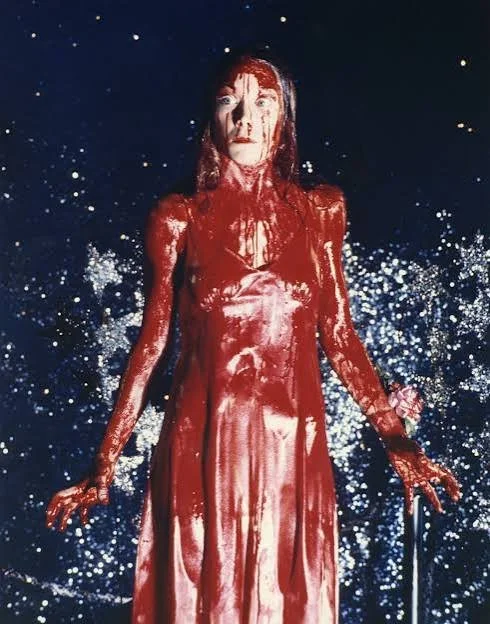
Honestly - those kids had it coming.
Female madness in society and beyond is a complicated topic. I’ve been reading a lot lately about women mere decades ago being diagnosed with and hospitalised for mental illness in ways that are more telling of the societal values of womanhood than their individual mental states. After all, the line between “mad” and “not mad” is entirely man-made.
Modern medicine, for all its incredible advances, has also been abused for centuries to control women, especially those who may act out, cause trouble, or go astray. It wasn’t so long ago when families would be able to have their depressed relatives “cured” with an icepick through the eye socket. (Rosemary Kennedy, sister of JFK and RFK, was permanently incapacitated by a frontal lobotomy, which was sold to her family at the time as a cure for her mood swings and depression by the rather sketchy doctor who popularised the procedure in the USA until a few too many rich people had terrible “side-effects” from having their brain hacked at).
Then there were the painful and traumatising experimental treatments - cold water therapy, the early days of electro-shock therapy, doled out to cure depression (as survived by movie actress Frances Farmer.) For the woman who wouldn’t stop acting out, there was always the promise of a life-long trip to the far-away hospital, to prevent her making polite society too uncomfortable (the original flapper Zelda Fitzgerald suffered such a fate, eventually losing her life to a fire in the hospital that she couldn’t escape from, but whose life and work has gained many well-deserved re-imaginings).
While we pretend that they’re not there, the labels placed upon humans suffering from mental health problems still linger in our collective unconscious: “Insane”, “monster”, “psychopath”, “crazy”.
“In 1970, at a meeting before the American Psychological Association, a mostly male audience of psychologists, feminist psychologist Phyllis Chesler asked for one million dollars in repatriations for women who had been "punitively labeled, overly tranquilized, sexually seduced while in treatment, hospitalised against their wills, given shock therapy, lobotomized, and above all, unnecessarily described as too aggressive, promiscuous, depressed, ugly, old, fat, or incurable”. The audience sat there in silence. Maybe they thought it was a joke.”
The horror genre, however, does not attempt to hide its psychotic women. Rather, it drags our hidden darknesses into the light, waving around the untouchable parts that society would prefer to never look at again. In horror, we can explore female madness, its causes, its triggers, and its sometimes bloody ends.
For all the sad girls
So sad.
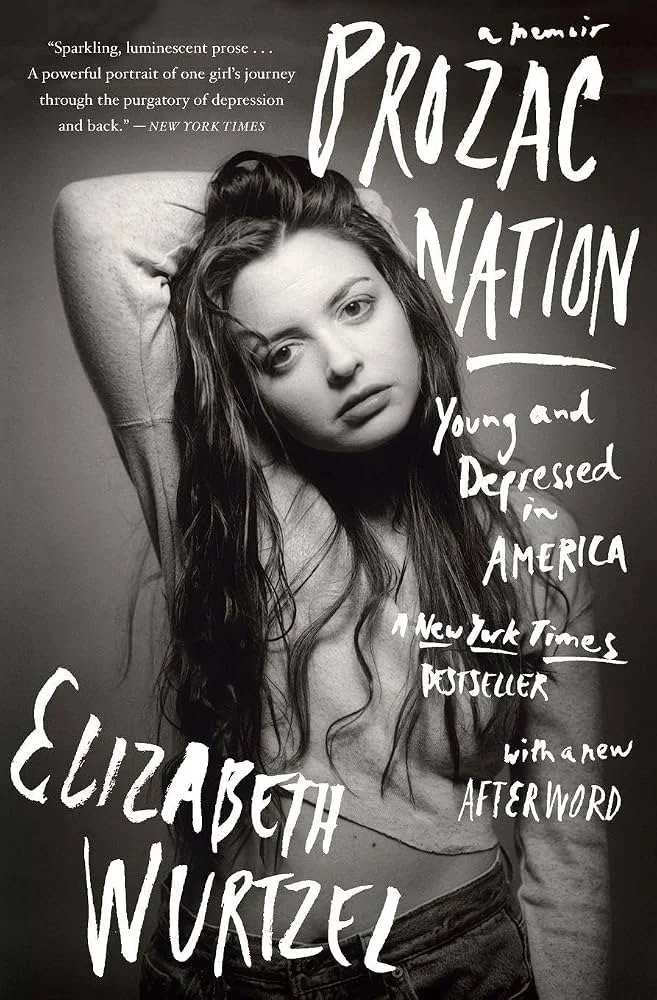
Culture can have a tendency to romanticise the longing and silent pain of depression in (young, hot) women. I remember being 15 years old and secretly thinking that depression was something cool and sexy. Movies and books hinted that depression, the silent dark retreat of unexpressed anger, gave a woman a mysterious edge. I was also being tricked by a series of chain-smoking, black coffee chugging, collar-bones-sticking-out femmes of “Prozac Nation’s” Elizabeth Wurzel, or Winona Ryder in “Girl, Interrupted.”
There can be a tendency to romanticise the longing and silent pain of depression in women, unsurprisingly for life under patriarchy, as a silent suffering woman is preferable to Isabelle Adjani screaming down a U-Bahn station.
Luckily we have horror to put us right about the realities of actually living with the endless onslaught of depression, in all of its not-showering, not-getting-out-of-bed, and silently-deciding-all-your-friends-hate-you glory.
TW: Suicide
In the short comedy-horror CONTROL (Alison Beck / Kimmy Gatewood), we watch a perfectionist planning her suicide, in obsessive detail (making sure everyone has the correct information in the correct binder). We dive straight at the taboo, and it is played for its dark comedic glory, reminding us that suicide can be just as ridiculous as life. While you wouldn’t necessarily think it’s a suitable topic for a horror-comedy, “Control” nails the reality of a specifically female-coded suffering, the need to make sure everything is ready, smoothed, perfect-seeming, despite the dread and angst that is driving the protagonist to her early death.
In Tim Egan’s terrifying 2018 short “Curve”, we slip into pure metaphor. A young woman wakes up suddenly, trapped on a sloping ledge, her hand broken, tortured by the screams of others around her as they presumably succumb to the deadly fall into the abyss below. A film with no dialogue, just incredible sound design, Egan has spoken about how “Curve” is an illustration of being trapped in a depression. I screamed while watching it in my bedroom.
Ode to the self-destructive performer-girl
“There is a way in which you present as very sturdy to the world, yet inside you are carrying an incredibly heavy weight.” Anna Marie Tendler, “Men Have Called Her Crazy.”
As the resurgence of body horror (more! More! MORE!) by and centred around women’s stories continues, there is a lot to celebrate (I’m thinking squirting blood and old-school visual effects which bring me so much joy.) But one thing I’ve noticed in some contemporary female-fronted body horrors (“Saccharine” (2026 Natalie Erika James) or “The Substance” (2021 Coralie Fargeat) is when the mad woman directs her anger only at herself, thus gently skipping over exploring the societal pressures that may shove a perfectly good ageing actress over the edge into a goo-spilling monster.
A short film I adore that perfectly centres the self-destruction inherent in a woman’s need for the whole world to love her is Lea Rose Sebastianis’ “Please Love Me.” It’s a gloriously unhinged tale, told in a reel - in glimpses, a narrative never over-explained, of two young women whose creative partnership falls apart when one desperately vies for an adoring crowd, taking it all too far. The film also offers a critique on the destructive nature of being permanently online.
No, everything is fine. really. it’s. fine
“Anger is usually about saying "no" in a world where women are conditioned to say almost anything but "no.”
― Soraya Chemaly, Rage Becomes Her: The Power of Women's Anger
To have been socialised as a woman in a patriarchal society is to learn to hide your rage. Girls are taught, differently from boys, to run from anger and to push aside our feelings. Feelings, however, aren’t into being pushed away, and prefer to lurk, to grow, and to eventually stampede down the doors of your consciousness.
In “Your Monster”, a horror/romantic comedy/ creature feature by Caroline Lindy, our protagonist Laura hides her anger. She is a “nice girl”, quietly allowing herself to be broken up with while she’s about to undergo surgery for cancer. Then, while recovering in her childhood home, alone because her mother has gone away, Laura is reacquainted with the monster who has lived in her closet since childhood.
Blending genres in clever ways, “Your Monster” is a love story for the ages about a girl and her rage, with a distinctly horrific ending. It’s a great metaphor for what happens to the rage you think you’ve squashed.
As I mentioned above, body horror is the perfect sub-genre for exploring what happens when you try to mask your pain. I mean, how do you pretend everything is fine when there’s a gooey death baby sticking out of your side? This is the subject explored in “Appendage” (2021 Anna Zlokovic).
Rachel Senot and Eric Roberts (wearing an earring no less, from which he bases his character) share the screen in a film which sees a young fashion designer being tortured by a strange gooey baby growing out of her side, the manifestation of her anxiety.
Senot nails the perfect blend of grit and vulnerability as she tries to keep the mean-talking appendage from ruining her life, showing the sheer effort and determination it takes to survive trying to have both a life and a mental illness. With sound design to make you gag a little, it's another one for the ages.
Obsessed girls are in this year
“A personality disorder is not the foreign presence of demonic possession or a cancerous cluster of cells spreading among the internal organs. It is a pattern of cognition and reaction that impairs the capacity to be productive, happy and generally at ease. It is a fractured sense of self giving way to the weight of stressful interpersonal dynamics.”
― Merri Lisa Johnson, Girl in Need of a Tourniquet: Memoir of a Borderline Personality
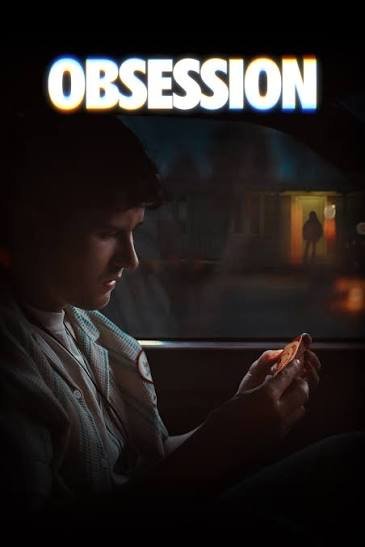
Recently “Obsession” (Curry Barker, 2026) took the trope of the deranged woman who is desperate for love to excellent heights (kudos to an amazing performance by Inde Navarrette). I appreciated that the mad woman was created by the desperate male protagonist, but I think more care could have been taken to plot the character’s way through her obsession and how it stripped away her own personality, interests, and life - leaving her on the edge of violence.
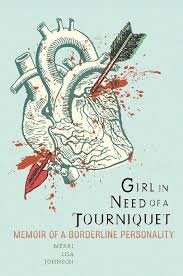
I think Curry Barker should have read “Girl In Need of a Tourniquet” - an autobiographical account of a woman who was diagnosed with borderline personality disorder to really get into the nuances of how deep self-hatred coupled with a desperate need for affirmation and a lack of impulse control can really fuck you up. (I’d also recommend watching the show “Crazy Ex-Girlfriend”, which I can’t write about here because it isn’t a horror. Boo!)
One fun short film example of the power of female obsession is “Her Curse”(Corey Totten, 2024), a Youtube smash hit, probably due to it starring Youtuber Not Even Emily (who gives an excellent performance). We watch the protagonist spiralling after her breakup, watching her ex girlfriend finding love with a man. I love the derangement level of a woman who lays a curse on someone. It takes commitment, but after watching “Possession”, I would like the derangement to be a little more...intense…
Mommy dearest
“The idea of a woman standing at the liminal point between life and death, ferrying us across the unknowable space between, has a primal power and that power is monstrous.” - Sady Doyle, Dead Blonds, Bad Mothers
The primal change of motherhood has long been the subject of horror films. In “Rosemary’s Baby (1968, Roman Polanski), Rosemary is infantilised during her pregnancy and locked down until she is ready to give birth. “Prevenge” (2017, Alice Lowe), follows the lead character on a mission of revenge, urged on by the voice of her unborn child - the primal mother-bear protection level turned up to 11, invoking pure violence.
Vika Evdokimenko’s experimental documentary “I Don’t Need Adult Conversation” explores aspects of the primal forces that can be read as madness in motherhood. Evdokimenko uses horror film language in lighting, sound, editing to highlight the primal forces that are unleashed upon the subject of the film becoming a mother. She highlights a mud-covered female archetype, reminiscent of ancient statues such as the Venus of Willendorf. From these emerge a terrifying power.
Trigger warning - infant death.
The terror of the psychotic mother is represented in Farah Halime Hope’s short film “Tea With Friends”, in which horror film language (jump cuts, sound design, lighting) are used to highlight the terror hidden behind the calm-seeming psychosis of the protagonist, a new mother whose child has died. Hope uses the visual language to highlight the absolute tragedy of the pregnant woman who has been unable to transition to her societal role as a mother.
The protagonist clings violently to the maternal role with increasing desperation, ironically isolating her from the other mothers and wider society. The horror of discovering the state of her baby emphasises the absolute loss she is unwilling to face.
We are the weirdos, mister
“Female monstrosity inspires terror because it really can end the world—or our current version of it, anyway. But our world is not the only one, or the best one, and in fact, the more time I spend with monsters, the more I think its destruction is overdue.”
― Sady Doyle, Dead Blondes and Bad Mothers
“I gravitate toward films that devastate and unravel me completely.”
― Kier-la Janisse, House of Psychotic Women: An Autobiographical Topography of Female Neurosis in Horror and Exploitation Films
Back to the beginning of this article, I do think that polite society wouldn’t have gone so hard on the women who threatened the status quo with their pesky voices and needs, if it wasn’t some kind of a threat.
Kier-la Janisse’s exploration of madwomen in the “House of Psychotic Women” combines the author’s extensive knowledge of horror and exploitation cinema with the tale of her own mental health peaks and valleys. What emerges is an understanding of why a woman would be drawn to the madwoman in the these films, even though often she is punished, feared, and misdrawn by male authorship.
Through these hallowed pages we were introduced to perfect films such as "Possession" and “Der Fan,” with their unapologetic depictions of women losing their absolute shit.
Very few experiences come close to the cathartic joy I felt as I watched the closing sequence of “Der Fan”, (SPOILER ALERT) where the teenage heroine, having been used and spurned by the subject of her obsession, murders, eats, and then burns his body before dumping his ashes into the street and walking away.
The joy I felt came from the recognition that teenage girls can be more than just screaming victims, idiotic followers, objects of unmet desire, or grist for the mill. Rather, they can be monstrous and powerful in their dreadfulness. It’s the joy I felt after watching “The Craft - Legacy”, rewriting the original without the witches falling into petty rivalries and instead using their combined power to destroy the patriarchal forces that were trying to control them. I think that anyone who has survived being a teenage girl can relate to this.
And in the short world, there are a few examples of psychotic women that I am happy to share.
“Hangry” (2023, Bola Ogun) is a perfect grizzly revenge film about a teenage girl who has had enough of her abusive stepdad. As she hacks him apart I kept picturing the abuses suffered by the girl on a meat hook in “The Texas Chainsaw Massacre” (1974, Tobe Hooper) or the darkness endured by Becky in “Henry, Portrait of a Serial Killer” (1986, John McNaughton), and there’s a release in seeing an abuser suffer at the hands of his victim.
And last but not least, if you’re craving a woman who is just deranged, no apparent reason, just because - we have “The Stylist” (2020 Jill Gervargizian), in which a trip to the hairdresser becomes something way more sinister. The character of the Stylist herself, who eventually gained her own feature film, is a beautiful example of a female “monster” lurking behind a Peter Pan collar and perfect hair-do. A backstory is hinted at when we see scars on her neck, but the reason for her madness is not our business. We are invited to sit and watch the horror unfold for her client just because. And why not, men have been deranged in cinema forever, maybe it’s time to settle the score.
Extra thanks to Eli Lewy at Final Girls Berlin Film Festival for sharing her list of excellent madwomen-centred shorts, some of which appear in this article.