Micro Dramas - The Future of Film, Or The Beanie Babies of NFTs?
It feels like everywhere I’ve been in the last couple of years, online or offline, there’s been someone yelling about how microdramas are THE FUTURE OF FILMMAKING! And some kind of veritable gold rush seems to be taking place for the hearts and minds of viewers who want their excitement in 90 second chunks. Now call me a cynic, but I have lived through a few of these so-called gold rushes in my time, some of them (social media) proved to be the future, others (NFTs? Beanie Babies?) weren’t entirely worth the admission.

Written by Jess Sweetman
Honestly, I’ve been avoiding the whole thing because it’s a little daunting trying to learn about an art form as it grows in front of us. However, that, my friends, is why the short film world pays me the big bucks.
I’m curious, what are vertical dramas? Are there any good ones? Or are they a portent of doom reminding us that our attention spans have been fiddled out of existence by tech machines, squeezing us until pennies come out. What can vertical dramas tell us about the politics of now? And, aside from the usual promised gold rush - can filmmakers actually find some kind of living from making them?
As usual, I donned my best wetsuit and dove the hell in.
What is this vertical drama you speak of?
Let’s start with the basics. Vertical dramas are episodic stories, which are parsed out in chunks of around 1-3 minutes. Their name comes from their being filmed vertically and being extremely short and catchy so that they can be distributed, and monetised on social media platforms such as TikTok, Youtube Shorts, or Instagram/Facebook Reels.
Attention spans being what they are, the dramas are designed so they have a hook in the first seconds of the video and then end each minute on some kind of cliffhanger. The most visible(and problematic) versions resemble those matching games you’d see advertised a few years ago, where a soap-like story would accompany some kind of puzzle.
Interestingly, for vertical dramas the art form seems to be secondary to the monetisation aspect in industry discussions, making it more akin in my eyes to reality TV than short film - at worst a cynical cash grab, at best something worthwhile that knows its value.
There are hundreds of apps that you can download to buy and watch vertical dramas, as well as watching them on social media channels. Each platforms hosts hundreds of titles, with the first few episodes available for free, and then requiring a subscription to watch to the end (there are around 90 episodes per story.) You can pay a monthly subscription fee - ReelShort, for example, one of the leading platforms in Europe right now, charges €14.99 a week to access its content.
Stories hosted on social media platforms are monetised via TikTok or Meta’s usual monetisation methods - advertising money or product placement. Here’s a really good wrap-up of how the non-Asian vertical landscape is growing in 2026 from Deadline.
In Asia, vertical dramas are outpacing features in terms of earning. “By 2024, estimates suggested the (Chinese) market was worth around US$7.31 billion, more than China’s 2024 box office of US$6.15 billion.” In 2025, the China box office recorded about US$7.5 billion, while the micro-drama market is estimated at US$10-14 billion. The overall user base for micro-dramas is estimated at 696 million in 2024, while the cinema-going audience base is roughly 500 million.
Through all of the potential excitement of the vertical drama genre as it reaches Europe and North America, there’s a genuine feeling that no one seems to really know how this stuff is going to go, although lots of people will boldly tell you what they think is coming up.
The cynical part of me remembers when everyone kept telling you to invest in NFTs a few years ago. The artist in me is more curious, how will this art form, so akin in some ways to short film, influence shorts? And will anyone ever make a good vertical drama that is worth watching?
Content-wise, here’s what I’ve noticed so far with some added snark, because that’s what I do.
A. Tier 1: Addictive Schlock Ahoy!
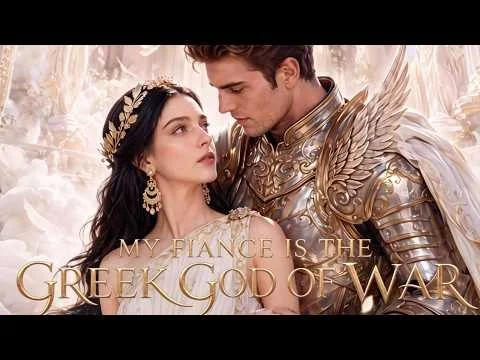
Your fiancee is the Greek God of War.
On my first exploration of vertical dramas and how the landscape seems right now, I found quite a lot to put me off, which surprised me since I’m a soap opera gal from way back. I love episodic drama - I want people to eyebrow act at each other in a room, I used to make up stories where my Barbies were all generating sex scandals with one another just to amuse myself. But the vertical dramas I have seen so far have left me cold.
Firstly there is way too much generative AI for my liking, and it seems to do the job of de-humanising a lot of the actors, making women's noses extra buttony, or sharpening dudes’ abs, or evening skin tone to the extent that a lot of the dramas I could see seemed to glamorise extreme thinness and whiteness. It’s culturally boring and leans towards white supremacy. I mean, after searching for an hour or so I was yet to find a single person of colour in any of the dramas.
The storylines also put me off. There seem to be a lot of male CEOs as objects of desire by women who weren’t afforded any power aside from beauty. Very 50 SHADES OF GREY, a book I didn’t even skip through to the rude parts because it was sooooo badly written. It felt as if no work had been done at all in our society about gender parity, and any room for discourse around this was removed and replaced with fairytales about gaining wealth and power in order to settle down and have babies.
Still - Some of the titles were pretty amazing. MY FIANCEE IS THE GREEK GOD OF WAR is an album title waiting to be claimed. What issues are going to arise when your fiancee is the Greek god of war? Will date night involve him trying to ravish you as a swan? How does that even work physically? Wait, I don’t want to think about that.
Deliver me from ai slop
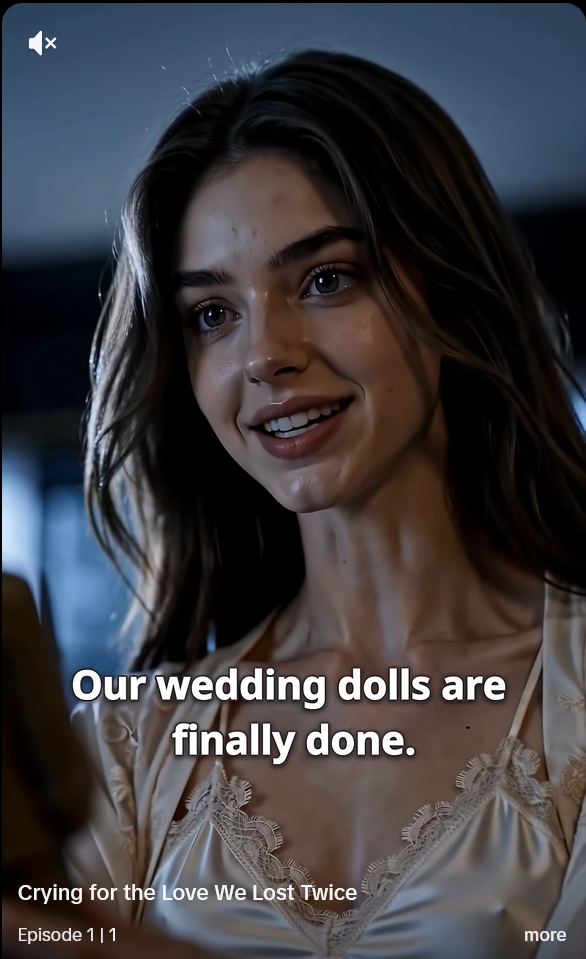
Uncanny valleyish
Another front and centre issue I encounter immediately with the vertical dramas I’m watching is the profusion of AI slop. The images look doctored in that shiny, AI way that succeeds in being both plasticy and tacky at the same time. It’s no surprise that AI is everywhere that vertical dramas are, the technology and the art form are being developed, often in tandem.
MyDrama, for example, is a huge platform, created and run from Kyiv, Ukraine under the umbrella of a company called Holywater Tech. According to its website Holywater Tech lists itself first and foremost as an AI company, stating: “HOLYWATER TECH builds Hollywood 2.0 by amplifying creators' talent with AI and smart technology.” Its drama offerings seem like the standard fare, with highly used filters, thin or buff white people galore, wooden acting, and stories about innocent women being accidentally impregnated with the final heir of a muscly vampire dude, etc.
And it makes sense that a form designed for raking in cash would use AI in order to do this more quickly, but, ugh, I thought we were better than this. So is there anyone in the space creating anything of quality?
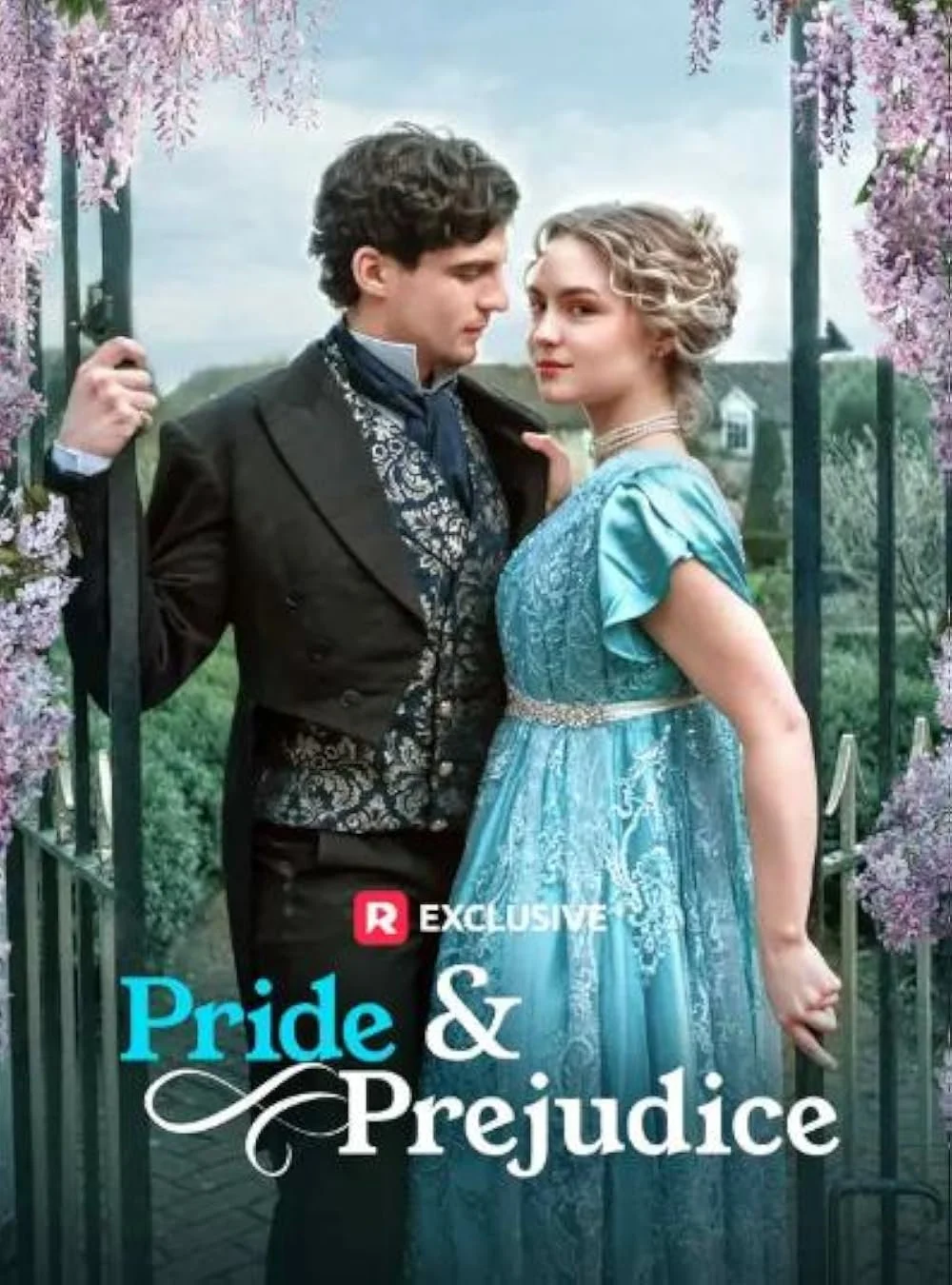
Spoiler - it doesn’t actually have much to do with the OG novel.
Well perhaps - but I need someone to pay me to watch the Reelshort adaptation of Pride & Prejudice. Will an AI Colin Firth walk out of a river?
Tattle TV is the first British microdrama app, having launched in early 2026 offering a drama about a Polish MMA fighter and a reality show featuring people dating with dogs. They seem very good at talking about themselves in the press, but the links in their website lead to a series of social media dead ends, so I suppose the future of the medium in the UK is yet to be written.
B. Tier 2: trashy trashy tried and true (enter the bravoverse)
@bravotv You're booked for a cut and confessional 💇♀️ #SalonConfessionals now streaming on the @Peacock mobile app! #MadisonLeCroy #RealityTV #NewShow ♬ Episode 1 from Salon Confessionals - Bravo
Reality TV has reached a pinnacle where data about what people want to see has been blended with editing techniques that make us continually thirsty for more, so it’s not surprising to see the usual titans of reality appearing in the vertical space.
I’m not gonna lie, I am a sucker for some of the corners of the Bravoverse. If the sparkly soaps have left me a little bored, I imagine that reality TV was designed for this format - 1 minute of gossip from ridiculous-looking people? Yes please.
In the US, Bravo have teamed up with Peacock for SALON CONFESSIONALS, a series available on the Peacock app featuring hair stylist Madison LeCroy (of SOUTHERN CHARM fame), where she styles hair and gets gossipy tidbits from her coiffered clients.
In all honesty, these shorts come the closest to something that I would actually pay to watch, but these seem like something I would definitely end up paying for if, for example, there was another lockdown, or I broke my leg and couldn’t go anywhere, or I had a nervous breakdown.
Bravo have a built in star system that they’ve put to use in their vertical offerings. For example, Campus Confidential Miami features Georgia Gay, daughter of real housewife (and New York Times Bestseller ™) Heather Gay. (Yes I read her book.)
And there are some new ideas in the vertical reality sphere. LOVE OR DARE is an 80 part vertical series which looks to “test the limits of a relationship” by torturing a couple on camera. With 189,000 views on the app MyDrama, it seems, in the tried and true method of Love Is Blind and Married At First Sight to be smashing its goals just as it smashes its participants’ lives. Hey, sometimes you have to sit around and wonder where your callous disregard for other humans’ dignity came from.
If you’d prefer something a little gentler Tattle offers a dog dating show.
c. Tier 3: Is there anything actually good out there?
Enter Issa Rae. Rae is someone who I definitely trust to take to the micro-short format, she came up from the success of her Youtube series THE MISADVENTURES OF AWKWARD BLACK GIRL after all, before rocking it with her HBO series INSECURE.
It turns out that Rae’s foray into micro-drama, entitled SCREEN TIME was released exclusively on TikTok’s own micro-drama platform PineDrama, where you can watch all of the episodes for free. And if PineDrama isn’t available where you are, you can watch the whole thing over on TikTok. Now we’re talking!
Watching someone who knows how to actually make a TV show make one of these makes all of the difference. The format becomes fun in the right hands, the mix of hooks and cliffhangers becomes playful and the audience is drawn into the world. It feels less like a cynical cash squeezing operation and more akin to - dare I say - art?
I’m apparently not the only person who feels like this and a mix of American and British production companies have have formed something called the “Micro-Series Certified Alliance”, an idea thought up by American producer Irv Gelb, who was prompted to act after being alerted that data-driven storylines were leading to more and more potential humiliation and sexual exploitation of actors. He wrote on LinkedIn that:
“audiences are demanding “romance, adrenaline, fantasy, twists, hooks, cliffhangers and smart storytelling,” not “humiliation, degradation, shock-for-shock’s sake, copy-paste stories with new lipstick, frozen girls and ‘I can’t be pregnant with twins — I’m a virgin!'” storylines.”
Like everything in this space, this is all very new. The British partner in the alliance, Onset Octopus are still working on their first offerings in combination with Tattle TV. They are promising a romance show driven by a queer love storyline featuring a more diverse cast, but we will have to see where it all goes.
d. Tier 4: The indie future?
With all the chatter around vertical formats, it seems like there’s no shortage of filmmakers who are willing to give it a go. Maurice Grey is one of those filmmakers! Grey is a filmmaker, actor, and producer living and working in Berlin. He’s a self-taught filmmaker who has studied acting at LAMDA and went on to take part in the Sundance Collab for screenwriters. I found him TikTok, where he had launched a casting call for his latest project, a vertical drama heist story with a cast of mostly non-white actors, which struck me given the overwhelming whiteness of a lot of the content I’ve seen so far.
Maurice considers himself an entrepreneur in the film world, with a background of working in tech before he became a filmmaker fulltime and the spirit of the tech world is clear in his clear ambition and aim to develop three to five vertical pilots in one go, each with a different universe, in order to test content via TikTok and see what gets the most engagement. The aim of the endeavour is to sell a product, Grey states of his pilots (our interview was in person so I’ve edited the wording for brevity): “We'll have something to have a conversation around with any distribution platform or a partner, a sponsor, these sorts of things.”
I asked him about the appeal of the vertical format as an artist:
“The appeal for me is most certainly distribution, there's a low barrier to entry. We can go out and do something very very quickly.”
There’s also something appealing to him as a new-ish filmmaker: “Being able to experiment with a new medium that everyone's getting used to, it provides some time for everyone to get used to the constraints of the format. And this would be happening for me anyway. And so it's nice that I'm sort of now in a similar position that the rest of the industry is in.”
In addition, with the new landscape of vertical drama, he sees a potential shift in power dynamics in the industry:
“I think as creators of vertical dramas, it's an opportunity to shift power and the power dynamics have been drastically misrepresented and skewed towards the financier folks that have had access to space, technology in some cases.”
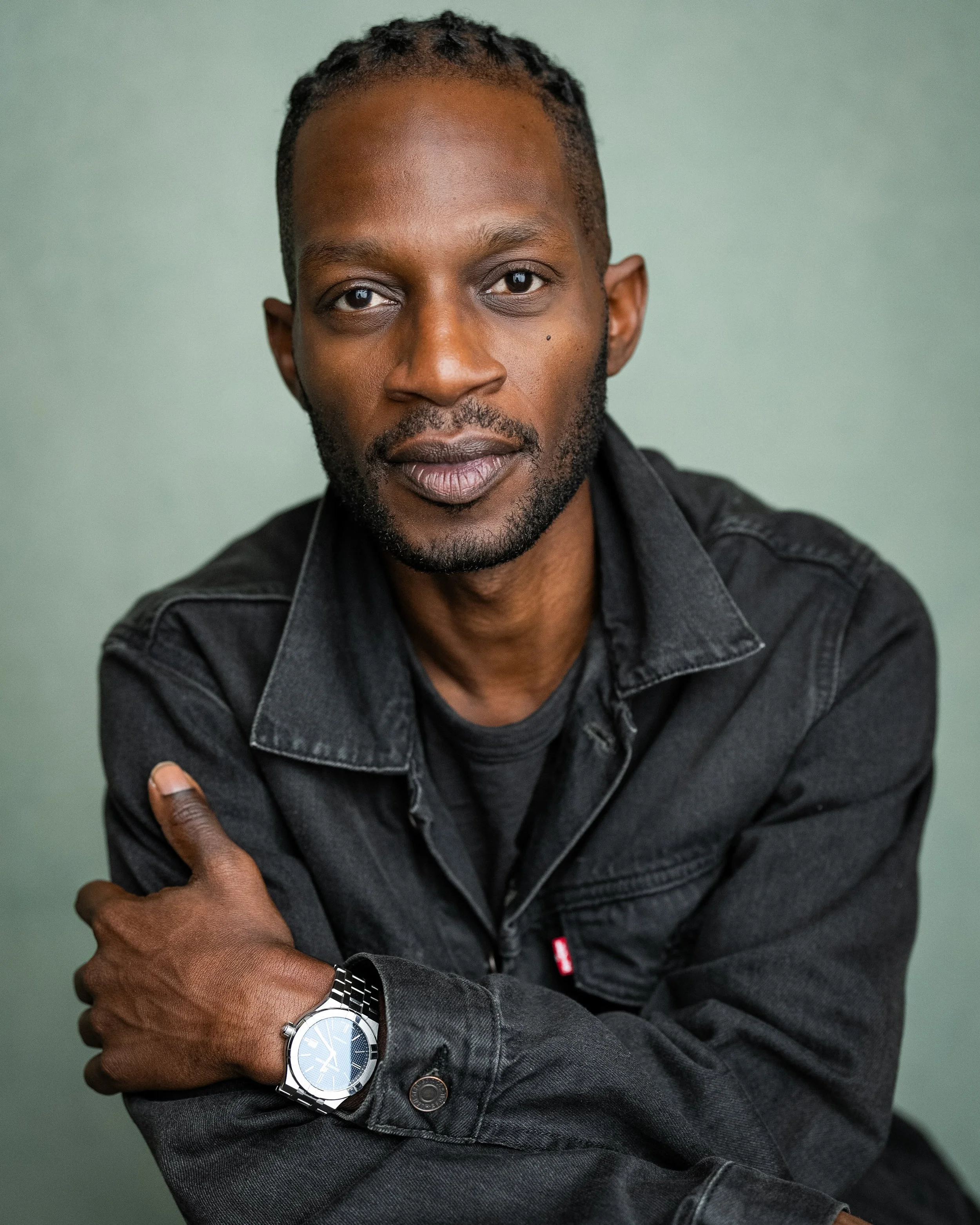
Maurice Grey
The creation of the shorts themselves merits its own article, Grey touches upon the technical challenges inherent in world building, making relatable characters, filming in vertical instead of horizontal form, as well as the obvious issue of having to write a script with a hook every minute.
Then we talk about politics and representation in the medium. Maurice is African-American and Muslim, which, he states, shapes his approach to filmmaking:
“My entire life I've existed in the white gaze. is not just in the United States but here in Berlin as well. I'm interested in shifting my own perspective and a means of doing that is by writing stories that come from diverse places as well and trying to tap into different points of view.”
And in terms of audience building and representation, Maurice is looking across the ocean to Africa, where Maurice explains that exciting times are ahead:
“Ovr 75% of the African continent is under 30, I think it's actually closer to 90% is under 30, which is crazy. I bring up the statistic just because often there's a response that there isn't an audience for stories that feature - let's stay with black actors in this case - but it's empirically not true and so I'm interested in finding the audience and by finding the audience I want to cultivate and create something for them first and then have a conversation about what's interesting.”
Update: Maurice’s vertical drama just dropped its first episode on Instagram - watch it now!
In conclusion: Think globally act - um - globally?
So perhaps the future remains somewhat unwritten when it comes to vertical drama, after talking to Maurice I have some hope that talented filmmakers will make what they will from the medium, just as artists have throughout time. Whether or not it’s a gold rush? That I cannot say. I’ll keep one eye on the vertical world for now because you never know when an actual human artist will do something incredible somewhere that will change how you view an art form forever.