The Runtime Paradox: The Long And The Short Of It

Written by Mark Brennan
Today we’re going to talk about length. How long or short you may have it, it’s what you do with it that counts. I am, of course, talking about runtime, you saucy minxes.
Runtime is one of the most important factors in a short film’s chance on the festival circuit. With a finite number of minutes to fill in a competitive screening programme, every film regardless of length, must justify every second of screentime.
This is as true of a 3-minute short as it is a 30-minute short – more so in the case of the latter – but both need careful consideration.
Let’s start at the shorter end of the spectrum; micro shorts. It is entirely possible to make a festival-worthy short film that is anything up to 5-minutes in length, but it will always need a satisfying narrative arc. If it’s a comedy, something too short is in danger of a programming finding it to be a skit/sketch rather than a short film. If it’s a drama, there’s a chance the limited runtime means the programmer may feel there isn’t enough time to really invest in what is happening with the characters or the situations they face. That said, it is true that the short a film is, the odds of a festival finding a place of it are much increased.
This is because festivals like to programme as many short films as they can. With the average length of short films on the festival circuit being 10-20 minutes, festivals often find room for a film between 0-5 minutes to fill gaps in their screening schedule. They also offer a break respite for audiences who have watched much longer shorts one after the other. Of course, the film still must be of a quality to be selected, but that relatively short runtime as definitely something that can work in a film’s favour. Perhaps worth considering when thinking about making a short film with a festival run in mind.
Some festivals actively encourage short films of this shorter length. London Short Film Festival, for example, has an ‘LSFF: Under 5 minutes’ submission category. Encounters Film Festival has a dedicated ‘DepicT! 90 seconds or less’ as part of their programming, and Norwich Film Festival has a ‘Micro Short Film’ category for any film up to 3-minutes in length. This means that as well as having a practical edge over longer films in terms of runtime, there is an additional pool of festivals and festival submission categories available to shorter films not available to longer ones.

DepicT! winner 2025, Full of Sh*t directed by Clarissa Kumala
Of course, it’s more commonplace for animated films to relatively short runtimes, so speaking specifically about live action films, we’ve had a number of clients with micro-shorts who have enjoyed very successful runs. Examples of these include Pocketman, a 2-minute parody trailer for a film that doesn’t exist directed by Ericka Clevenger, and She, a 5-minute drama directed by Matt Greenhalgh about a woman struggling against an unforgiving inner voice which leads her on a mental journey that takes her right to the very edge.
The important thing is to make sure that your ‘short’ short is a standalone piece of work that doesn’t feel like just a scene from something bigger and makes an impact that programmers will expect from the runtime.

Pocketman directed by Ericka Clevenger (2-minutes)
Now, let’s look at short films with a much longer runtime. It’s here the waters become a little muddier when it comes to programming. The Academy Award definition of a short film is any film that is up to 40-minutes in length. However, many film festivals out there stipulate that for them anything up to 45-minutes or even 60-minutes would be eligible to submit as a short film.
To put this in perspective, we need to look at the unwritten rule of the festival circuit, which is once a film reaches the 15-minute mark, every second of runtime thereafter needs to work twice as hard to earn its place in a competitive programme. This is usually for two reasons. One reason is that as mentioned above, festivals like to programme as many films as they can and the simple fact is that the longer the films are, the fewer they can programme. The second reason is that it’s often the case films which are 15-minutes and above don’t justify the relatively extended runtime.
This brings up the key difference between a screening experience and a festival experience. Watching a short film on its own as part of a screening one evening is very different to watching it sandwiched between 6 or 7 other short films running back-to-back. It’s my opinion that people who regularly watch short films are among the most sophisticated film viewers when it comes to pacing. They can see the difference between slow-burn and just slow, atmospheric and meandering. These elements can be more easily forgiven in an isolated setting but less so when audiences are being asked to watch multiple films of varying lengths in one sitting.
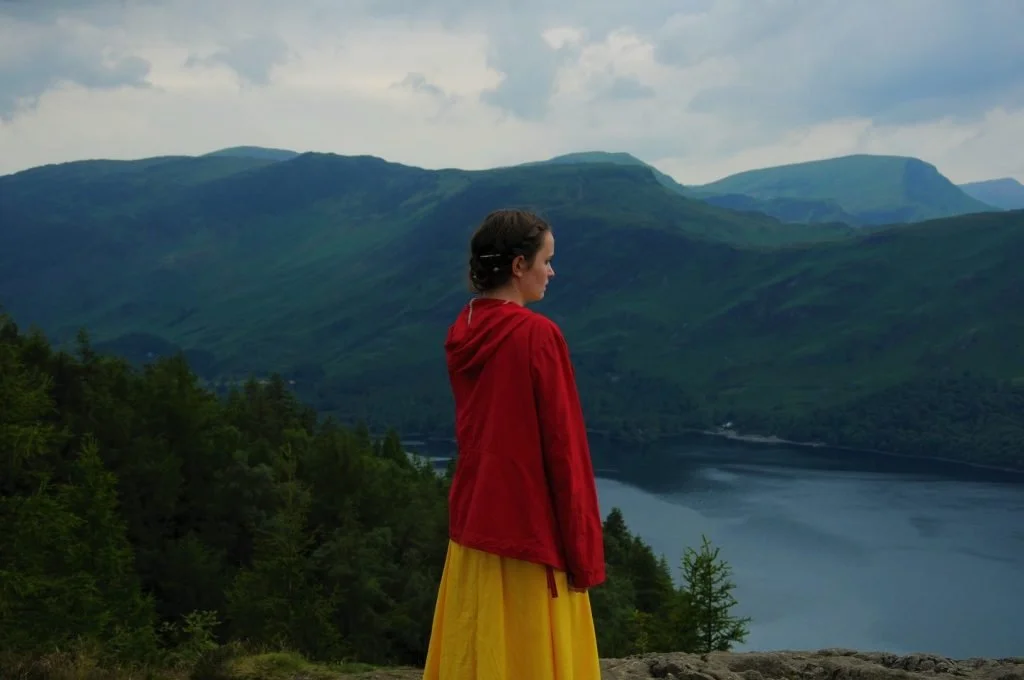
She directed by Matt Greenhalgh (5-minutes)
These are all lessons I learned over the last 11 years, going from a filmmaker on the festival circuit to a festival director at Exit 6 Film Festival. When we started the festival, we did so with a 15-minute runtime cap, and have screened films across the breadth of that time. The shortest film we’ve ever programmed was a 60-second horror called Meat Market directed by Will Kenning, so we’re certainly not against short shorts!
One reason for the original 15-minute runtime cap (which has since rasied to 20-minutes) was logistical. Our screening window for the festival was small in comparison to many other festivals, limited to a single day. This meant to programme as many films as we could, they would all have to be under a certain length. We also knew the likelihood of us programming anything longer than that was so slight it would be unfair to ask filmmakers to pay to submit.

Meat Market directed by Will Kenning (1-minute)
Which brings me back to the definition of a short film versus what some festivals will state they will accept.
There is always the chance a super 30-minute plus short film will be submitted to a festival, and according to the Academy, anything up to 40-minutes is a short film, but the reality is films of that length (narrative fiction in particular) will rarely get programmed. However, with that official definition and the fact some festivals state they will accept anything up to 45-minutes or more, signals are being unfairly given to new filmmakers that long-short films have an obvious place on the festival circuit. They do not.
In fact, with my filmmaker hat back on, I think it might be fairer for festivals to acknowledge the discrepancy between the length of film they say is eligible versus the number of those films that are ever actually programmed, and adjust their own caps accordingly.
At Festival Formula, we are all too aware of these unwritten rules, which is why with the interests of filmmakers at heart, we have a 30-minute runtime cap on the short films we will consider for strategies. This is precisely because we know the likelihood over any film over that length because selected for festivals reduces exponentially.

Finding Dad directed by Alana Hutton-Shaw (30-minutes)
Now, as always, there will be exceptions to this on the festival circuit. Our client Alana Hutton-Shaw’s Finding Dad, a 30-minute drama about a young woman searching for her absent father after finally being told his name at the death of her alcoholic mother, but generally-speaking, films at this length and above do have a tougher time of it on the circuit.
So, all this is to say, keep in mind how it is potentially going to be received by festivals. Does it need to be that long? Does it need to be that short? Does it convey everything you want it to without audiences either thinking ‘get on with it’ or ‘is that it?’
Above all, make the film you want to make, and however long or short the runtime is, but know it’s what you do with it that counts.