Success Is In The Eye Of The Filmmaker
Written by Esther Smith
Success can be such a daunting word, especially when we look at what many people consider success: a wealthy lifestyle, maybe notoriety, or the big and flashy milestones that impress the masses. But success is rather subjective, meaning it holds a different definition to every single person, there is no concrete answer on what success actually looks like. And when you’re thinking about success (whatever that may look like), it’s easy enough to start comparing where you are in your journey to another person. Social media, while inspiring to see people making it, sometimes drags me down the rabbit hole of comparison
There is one story that sticks in my mind when it comes to success, and it’s told by the author John Green. Recounting his days of Hollywood fame thanks to the hit success of book-turned-movie The Fault In Our Stars (2014), he says, “I was living the dream, but I wasn’t actually living my dream […] I’m glad I got to do it, but I’m even more grateful that I get to live my dream.” This video has struck a chord in me and over the last 2 years I’ve watched it repeatedly, especially when I’m thinking about my own personal and career success.
When it comes to short films, the spectrum of success is broad enough and this can be quite confusing when we think about success and how to track it. Films travelling far and wide with selections, attending festivals and seeing how audiences react to the film, connecting with other filmmakers, or securing distribution/online platform for after the festival run. The list goes on for all sorts of milestones one could achieve on the circuit… but you get my point!
From receiving a selection email containing a shiny laurel to attending industry events to further their career — these experiences do not sit in a hierarchy because it’s down to the individual and what they’re looking to gain. And while we may have thoughts about whether a film is successful in its run, it’s not up to us to decide but down to the filmmaker and what their personal goals in the circuit lie… which is exactly what I’ve done!
I’ve reached out to five filmmakers to dig a little deeper on the daunting word of success and what it looks like to them. Is it down to the number of selections so it’s seen by a variety of people, or their own personal experiences at festivals… or is it something else entirely?
Olawale Adetula, director of Overcomer, starts by explaining that success starts long before the festival circuit: “Just as every film begins from a personal place, I think the goals you set for that film should also be personal. It should not be reduced only to the number of selections, the prestige of the festivals, or whether the film wins awards. For me, success starts with actually completing the film. That may sound simple, but delivering a finished film is already a massive achievement. Anyone who has made a short film knows how much energy, sacrifice, problem-solving, collaboration and belief it takes to get from an idea to a completed piece of work. Whether or not the film gets into a festival, finishing it is already a win.”
It’s important for filmmakers to remember that: making a film is a huge success in and of itself and what happens on the festival circuit shouldn’t diminish what obstacles had been overcome to create a film.
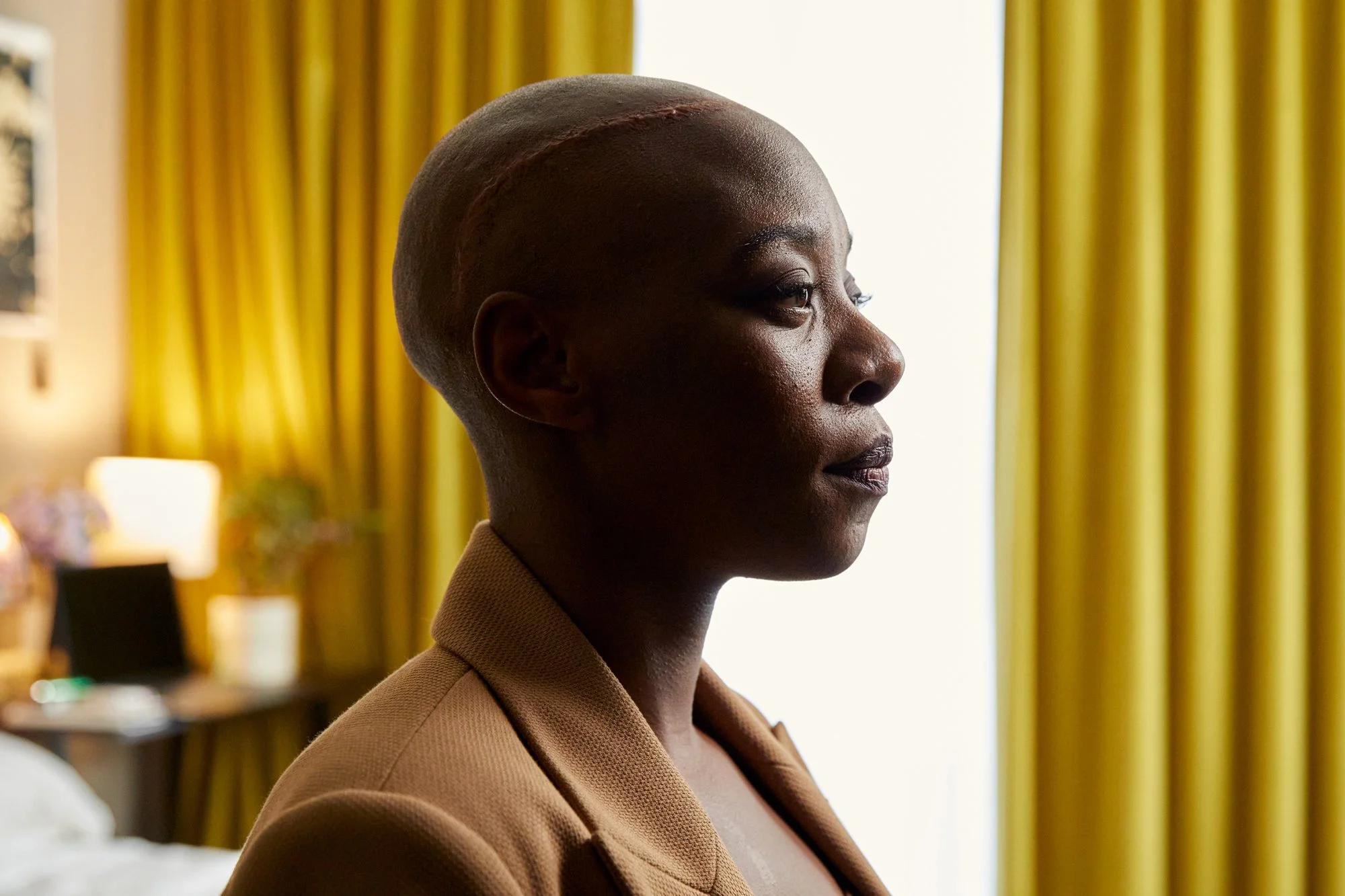
Overcomer, directed by Olawale Adetula
When a film moves onto the festival circuit, we’re entering a new territory. For Janie Price, director of You Found A Friend In Elvis, success is about connection: “Making art is all about wanting to connect so for me success definitely feels defined by the amount of people who are able to see your work and then make a potential connection to it.”
Olawale also notes the importance of audience connection: “With my debut short, Overcomer, what I needed most was the opportunity to understand how the film connected with people outside my immediate circle. So, in that context, success was not simply about getting as many selections as possible. One meaningful festival selection that gave me the chance to attend, sit with an audience, and have a real conversation afterwards would have felt like a major success.”
Panayiota Panteli, director of Loose Strands, opens up on the surprises she faced on the festival circuit: “It’s two-fold. From the perspective of a new filmmaker trying to break into the business, Loose Strands went through this journey of being industry supported from its initial concept therefore to be selected for a festival was super important. That would have been good enough for my first serious attempt at writing and directing my own narratives. However, it picked up some awards and notable mentions which surprised me as I could see its faults. At the festivals I was able to attend, I physically saw and heard the audience's reaction to our little film. As a storyteller who writes social impact narratives, this was hugely important to me, as it told me there was an audience for the stories I wanted to tell.”

Loose Strands, directed by Panayiota Panteli
We’ve seen how everyone’s aims for the circuit are different, and when it comes to the amount of selections, Malynda Hale, director of Au Gratin, raises a good point on quantity over quality: “I think the number of festivals is one way I would view success but also what festivals your film gets into. I think getting into one really great Oscar qualifying festival holds just as much weight as getting into a bunch of festivals that allows your film to be seen in front of more people. I think it just depends on what your goals are.”
Rodrigo Moreno-Fernandez, director of El Lloran, also reiterates the importance of the quality of a festival: “I would imagine every filmmaker would want to get better. I believe being part of festivals helps you judge that. Not by the quantity of them, but by the quality. Perhaps seeing your movie in front of an audience and fellow filmmakers would make you think of your decisions and if they were right or not. But you can only know that if you let it out into the world.”
Because success is a fluid concept the goalposts can shift in a way you’re not expecting. Marathon runners tend to have their pace time as their goal and if they’ve reached the finish line in a certain amount of hours, that marathon was successful. However, it may be that as they make their way through the course, their goals change: different times, different motives, or sometimes it’s just about crossing the finish line, personal records be damned.
While a goal and personal definition of success is good, to see it in the wider context of everything may give you a different perspective. I wanted to find out more about the potential change of goals and success as the festival journey continued.
Rodrigo finds his goals change to inspect the growth of his filmmaking voice: “I have. Not that I achieve it, but as a measure of my work. Am I getting better? Perhaps, by the type of festival that accepts me now and rejected me earlier.”
After attending a film festival, some goals shift in which they look towards the future, Panayiota says: “It became more important to network with other collaborators and meet future champions of my work than winning awards.”
Janie also follows that same thread by saying: ”I am more driven to keep making films because I have discovered through festival attendance a wonderful, supportive, inspiring community.”
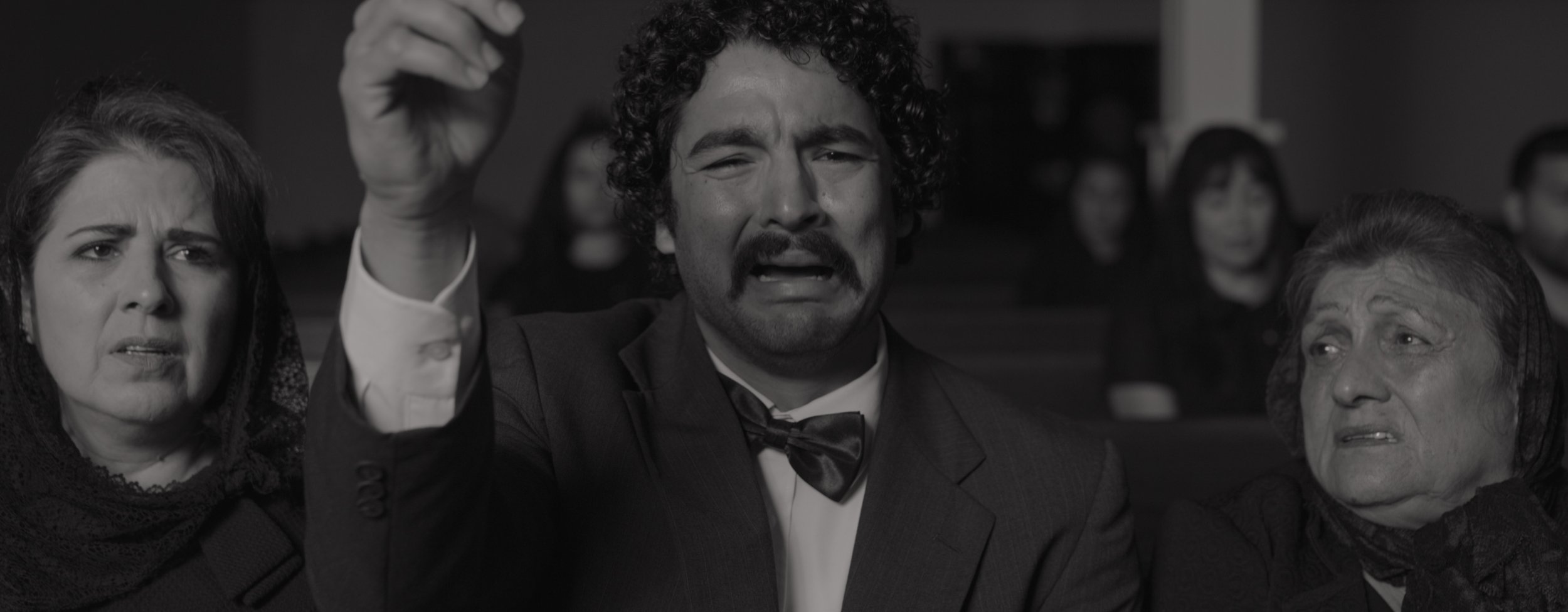
El Loran, directed by Rodrigo Moreno-Fernandez
Olawale gives an insightful response on how his approach to festivals have changed since being on the circuit: “As my career has progressed, my relationship with festivals has definitely evolved. With my first short, festivals were mainly about feedback, learning and understanding how audiences responded to my work. I wanted to know whether the emotional intention of the film was landing, whether the craft was strong enough, and what I could learn from watching the film with people who were encountering it for the first time. As I began making more work, festivals became less about validation and more about building a body of work and a professional profile. From the moment I conceived my next film, I started thinking more strategically about where it might sit in the festival landscape. I built a shortlist of festivals where a selection would help communicate that I had reached a certain level in my filmmaking journey.”
And while having your work selected by a festival may be validating, because we’re all human and we seek approval from our peers and community, sometimes it’s about looking inward: “I am not looking for them to tell me whether or not I am a filmmaker. I am more confident in my voice, my taste and the kind of stories I want to tell. Instead, I see festivals as a way to broaden my network, engage with audiences, meet potential collaborators, and create opportunities for future work. The value is not only in being selected, but in what that selection makes possible.”
But we can’t forget that while goal posts shift, they only need to apply if you want them to. Malynda’s found to appreciate everything else that comes after a selection: “I got into the one festival I wanted to get into so I would say I have found my definition of success. Everything else that comes now is a bonus.”
Like I touched on earlier, comparison is a mischievous little demon that lurks around corners and jumps out in your most vulnerable moments. It takes a lot of control to push that demon away and remember who you are, what you’ve achieved, and to celebrate it.
I asked the filmmakers about this: specifically, the balance between comparing your film’s accomplishments to another while also living in the present.
While Janie says she doesn’t compare her work to others, she finds joy in knowing her work is measured up to other high-quality films: “I do find inspiration in watching other people's work at festivals and get a lot of satisfaction in knowing work I have made measures up to work I admire and watch at festivals.”
While Rodrigo doesn’t compare films, he opens up on his experience: “I don't think so. I might have been jealous, I must confess, but that doesn't mean that I compare it, perhaps more as I wish I had.”
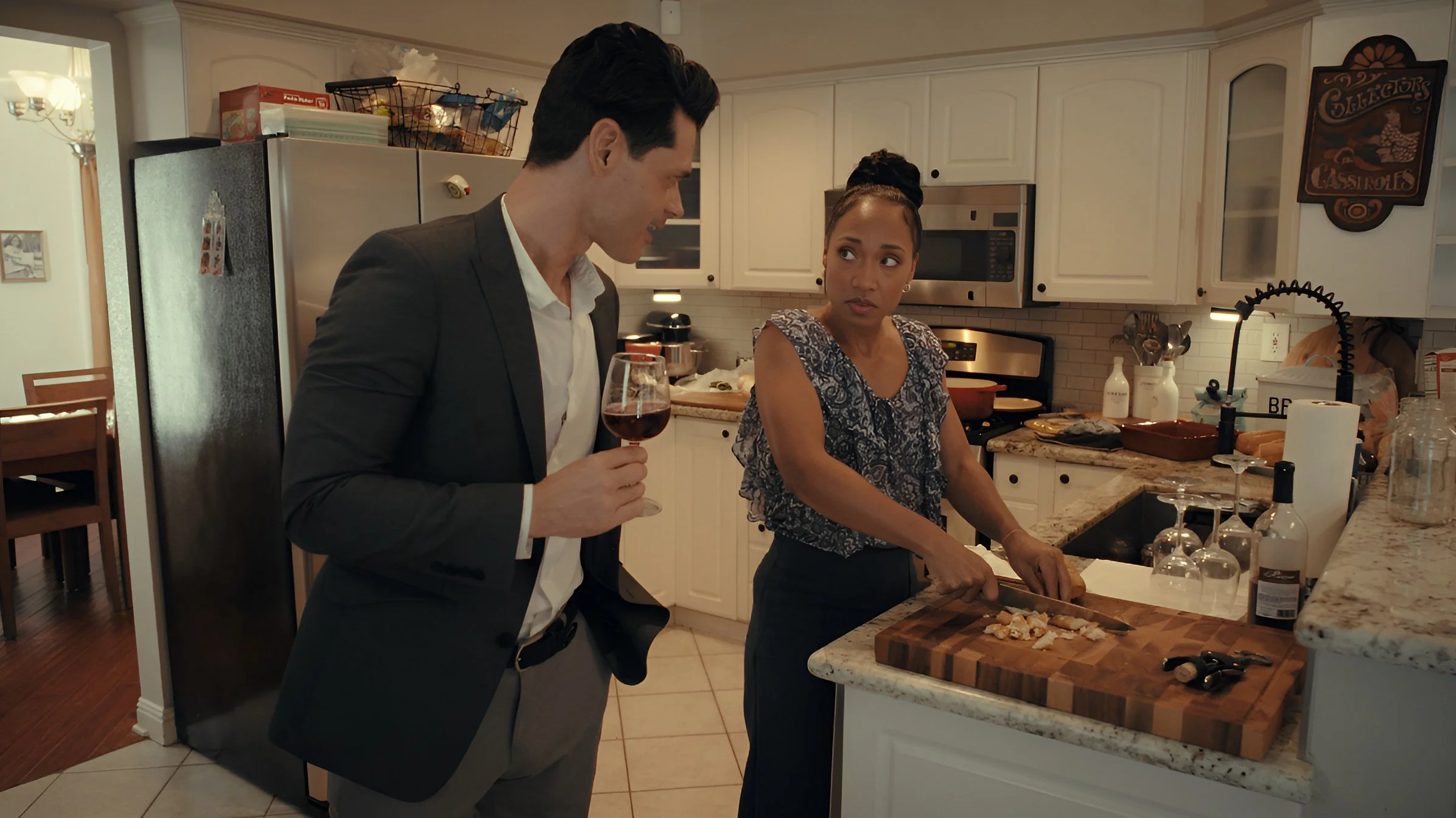
Au Gratin, directed by Malynda Hale
Olawale says it’s not whether or not the issue comparison ever comes across your mind but rather: “The real question is how long you allow it to stay there. Comparison can very quickly rob you of meaningful progress, especially on the festival circuit. If you start using another film’s journey as the measure of your own, you may end up judging yourself against factors you cannot see and cannot control. I say that with the privilege of experience, because it is easier to understand this after you have been through the process a few times. And if you do find yourself in that place, return to the goals you set before you started submitting the film. Those original objectives are a much better compass than someone else’s festival run.”
And if you find yourself stuck in that comparison cycle, remember that we’re all human and it’s not a failure to do this. But Malynda says we must remember the context on how our films have been made: “The thing I have to remember is I don’t know what that filmmaker went through in order to create that film, and there’s a good chance they are looking at someone else as comparing their success to theirs. I think we have to get into the habit of knowing what’s meant to be ours will be ours, and just be happy for other filmmakers that achieve things we don’t.”
Panayiota reshapes the concept of comparison into a lesson we can learn from watching someone else’s film: “I'm pretty grounded in the belief that there will always be someone else doing things better than me. I watched some amazing pieces of work from more established filmmakers and it was a joy to learn something from their work and to speak to them about their own personal journeys and of course to share contact details.”
The Demon of Comparison is now at bay, we’ve established some rationality and context to make sure we don’t let it take over — now we turn to pressure. I’ve personally put a lot of pressure on myself and TL;DR: it’s exhausting. Pressure can also fall in line with comparison: we observe where people are in their careers, or journey on the festival circuit, and start to question our own decisions. Have we not pushed the boundaries enough? Do we need to prove our worth?
I wanted to find out more about this unbearable weight we call pressure – do other filmmakers feel the need to prove themselves or their film successful? And what words of advice do they have to ensure other filmmakers don’t put so much pressure on themselves when it comes to tracking success?
Malynda starts us off with how pressure mounts when you have plans for the future of your career: “Absolutely. Especially because the shorts I’ve directed I want to turn into feature films and tell the full story. So there’s this need for me to prove that the films are good enough. But I think the most important thing is remembering if you made a film you did something so many people aren’t able to do. And the fact that you brought your vision to life, is success and that matters.”
The pressure doesn’t come from thinking about the future, it can creep in from those around you; where you want to make sure those who believed in you were right in doing so. Rodrigo feels this at times: “Perhaps. Not to me, but to the people who worked hard alongside me to make it. I just feel pressured not to let them down.”
Sometimes you’ll face rejection but that doesn’t always mean the project isn’t meant to be, but Panayiota pushed through that barrier: “I was shortlisted for BFI short film funding for Loose Strands, but I didn’t get selected. The disappointment can play mind games. Some filmmakers will define success on whether institutions like this give you approval but all it did was make me think, I still believe in this project and I am going to get it made. I did give myself a cheeky pat on the back when our first festival selection was Aesthetica. Be realistic, each short you make is a path to learning something new about your ability and your voice. Each small step you take to improve and learn to tell your stories in the most compelling and engaging way you can is success.”
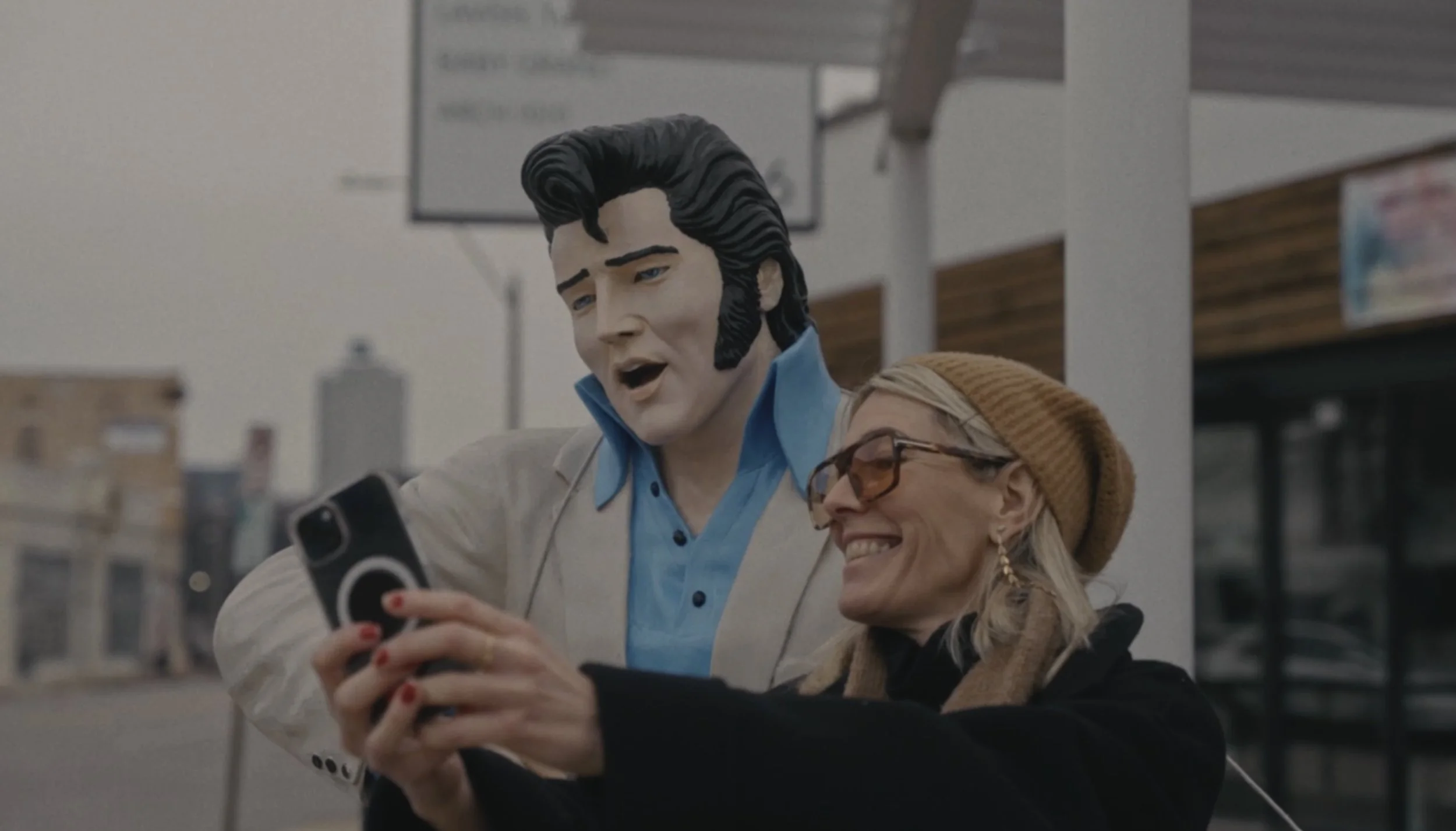
You Found A Friend In Elvis, directed by Janie Price
When faced with a no it can be difficult to process, Olawale understands this: “When you have put so much of yourself into a film, it is very easy to feel that every selection, rejection, award or silence is saying something about you, rather than just about that particular submission at that particular moment. The best advice I can give is to be as disciplined as possible with your own personal goals and objectives. Before you start submitting, decide what success looks like for that film and keep returning to that. Having that clarity does not remove disappointment, but it gives you something steadier to measure the journey against. One practical trick I have found helpful is not to become too emotionally attached to the submission process itself. Submit the film, then log out of your FilmFreeway account. Disable unnecessary reminders.”
But aside from rejection, Olawale also says we must reflect on what we’ve learnt: “Think about the version of yourself who started with only an idea, and recognise that you actually brought that idea into the world. For me, that will always be the bigger prize. Festivals can amplify the work, but they should not be the only thing that gives the work value.”
Leaning into this appreciation for what you’ve created, Janie says: “I always try to make the best art I possibly can but that's the only thing I am really thinking about.. Success is subjective — for me it's about the spiritual, the pursuit of connection, and it's about the culmination of years of artistic experience as a musician with an art and photography degree finally getting to put all my skills to work in one place — that feels like success to me — realising a way to use everything I can do and getting a huge amount of pleasure from doing so… for other people it might be fame, money but it also depends a lot on where you are when you start your journey… without monetary success for example some filmmakers can't make films.”
It’s Time To Look Deep In Our Hearts
Success, comparison, rejection — they’re present in any and all jobs, but in the creative industry sometimes these moments can make or break you if you don’t see them in the wider context. It’s inspiring to see how these filmmakers are able to look at their work and measure success by their own standards and experiences, not through someone else’s lens.
Their words also remind me there are many sides to not only the festival circuit, but to filmmaking itself. They’re right: making a film is not something many people are able to do, having your work seen by any audience is a privilege, and networking with other filmmakers can be so insightful into how you approach your next project.
We all know this but from time to time we need to be reminded: there is no single answer as to what success is, but rather a wide spectrum. Sometimes this can be frustrating when you’re striving for greatness but ultimately, it’s down to an individual’s perspective and what the word means to them. Because if we were to measure success by accolades alone, how would we learn to appreciate everything the film festival circuit has to offer?
While success can feel like worlds away, it might be that your success is not that far from your fingertips. Like John Green said: “What I want out of life is much more important than what I’m told to want out of life.”